

The best Claude AI books in 2026 teach the Claude that exists now, which is a different product from the chatbot of a year ago. Claude now works in your own files through Cowork and writes code from a terminal through Claude Code, among other new tricks. A book that stops at the chat window misses most of what changed. Anthropic ships features faster than most publishers ship a second printing.
The five ranked here were measured against one bar: a reader had to finish able to do real work with Claude, at the level the book promises. Two are written for people who have never used an AI tool, and three are for people who want to build software with Claude Code.
If you are still deciding whether Claude is worth paying for, our breakdown of Claude AI pricing plans covers the free tier and what each upgrade adds.
How we ranked the best Claude AI books
Every book was measured against the same four criteria, with the same weights. None got credit for its publisher or its price. The field is limited to books you can buy.
| Criterion | Weight | What it actually measures |
|---|---|---|
| Coverage of today's Claude | 35% | How much of the 2026 product it teaches, from the chat window through Projects and Cowork to Claude Code |
| Accessibility | 25% | Whether a reader with no AI or coding background can finish it |
| Hands-on practice | 25% | How much the reader actually builds or completes while reading |
| Trustworthiness | 15% | Its habits around accuracy, privacy and safety, and the editorial process behind it |
Coverage carries the most weight because Claude changed more in 2026 than in any year before it. Agents and Claude Code moved from developer previews into the paid plans, and a reader who learns only the chat window misses where the product went. The featured Ashford Partners title was read in full; the other four entries draw on each publisher's listing and description.
1. Claude AI for Beginners, by Steve Jackson
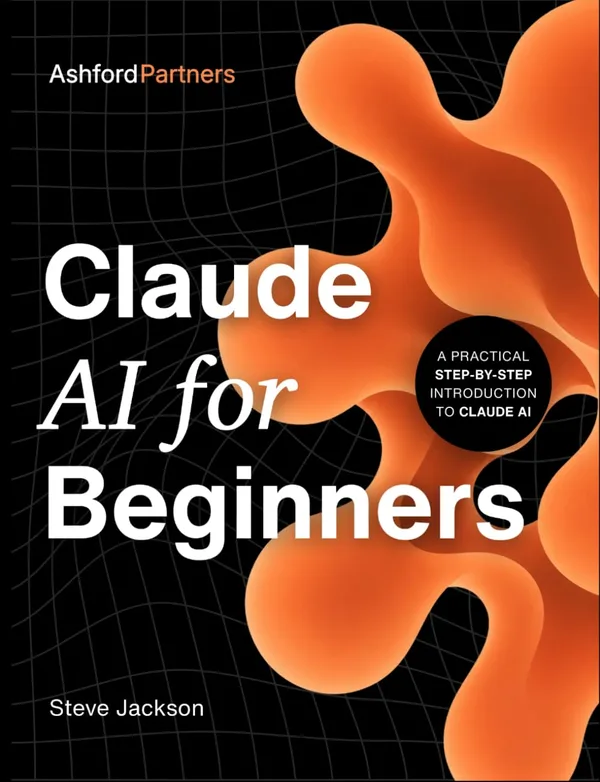
Claude AI for Beginners is an Ashford Partners title published in June 2026, at 225 pages organised as 34 short modules in six chapters.
The first half covers the chat app: how a language model predicts text and how to write prompts built on a task and its context. The second half walks through Projects and memory, then into Claude as an agent in Cowork and Chrome. It closes with Claude Code and a plain-language tour of the API.
What sets it apart is that one book follows Claude from your first message to Claude Code, at a beginner's pace. Safety runs through it, including prompt injection in the browser agent, where a web page hides instructions aimed at Claude. It advises running that agent in a separate browser profile, away from your bank.
It wins coverage and accessibility, and gives ground on hands-on practice. Its prompt examples are everyday tasks, and it sets no projects, so the Claude Code books at three and four give you far more to build. The Claude Code and API chapters are orientation only, with install commands and no program to write; developers should go on to Agentic AI Engineering or the books ranked below it. Its screen-by-screen tours will date fastest, a risk the book admits.
This book is published by Ashford Partners.
2. Claude For Dummies, by Stephanie Diamond
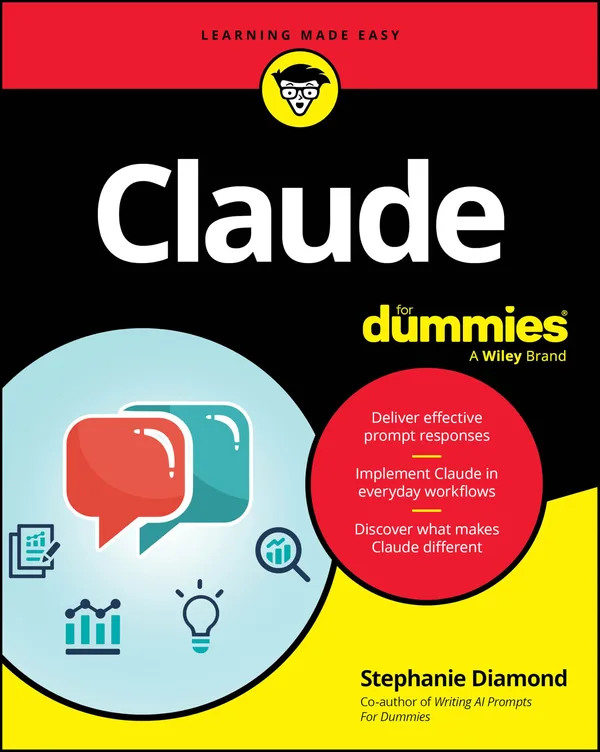
Claude For Dummies came out from Wiley in August 2026, at 400 pages, the longest beginner book here. Diamond is a marketing professional who has written more than two dozen books, including Writing AI Prompts For Dummies.
It covers writing prompts and troubleshooting weak answers, then the three models and the plans from Free to Enterprise. Step-by-step examples cover documents and data analysis among other tasks, at work and at home.
What sets it apart is its weight on judging Claude's answers. The listing returns again and again to fact-checking and to knowing which tasks suit a chatbot at all, which is the habit a new user most needs and least often has. The series format helps too: short sections and plain language, with the familiar yellow cover that tells a nervous reader they are in safe hands.
The gap to first is coverage. Nothing in its description mentions Cowork or Claude Code, so it reads as a guide to the chat app, and the half of Claude that acts on your behalf appears to fall outside it. Readers who want only the chat app may prefer it to first place.
3. Build with Claude Code, by Taeho Jo
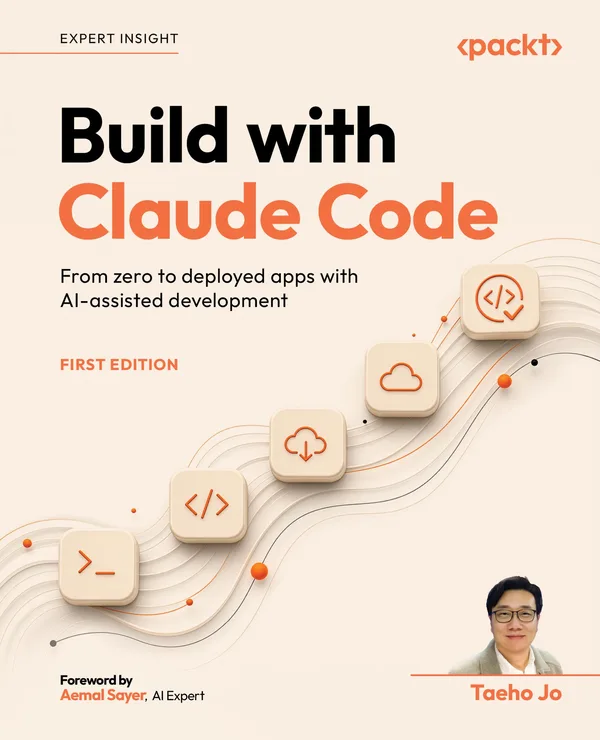
Build with Claude Code was published by Packt at the end of August 2026, at 408 pages. Its listing says no prior programming experience is required, and it names product managers and marketers among its readers.
It is built around nine projects that grow in difficulty, from a first webpage to a quiz game and FridgeChef, an app that pairs image recognition with text generation. Later chapters assemble Claude Code agents into a small development team and extend it with MCP servers and Skills, before deploying a database-backed app.
What sets it apart is that you ship working software. Every chapter ends with something that runs, and the last one ends with something other people can use. If FridgeChef lives up to its name, the half onion in your fridge may finally have a future.
It lands third on coverage. It teaches Claude Code and nothing else, so the chat app and Cowork are outside its scope. A reader who wants to use Claude for documents and research will find little here, and anyone new to the command line should expect a steeper first week than the two books above it ask for.
4. Agentic Coding with Claude Code, by Eden Marco

Agentic Coding with Claude Code was published by Packt in March 2026, at 376 pages. Its listing addresses developers with prior software engineering experience who want to move past chat-style prompting.
It covers context engineering and hooks among other Claude Code features, and gives the Model Context Protocol, the open standard that connects Claude to outside tools, its own treatment. The reader builds and iterates on a Next.js application, then designs multi-agent systems with subagents and parallel sessions.
What sets it apart is that it compares the extension options. It weighs MCP against Skills and subagents so you can choose between them, which is the decision working developers get stuck on once the novelty wears off. It also covers enforcing coding standards through project documentation, which matters once a team shares one codebase.
It lands fourth because it assumes engineering experience, which costs it on accessibility, and it covers Claude Code alone. Published in March, it is also the oldest book here, in a tool that adds features most months. For a professional developer it may well be the most useful book on this page; for anyone else it is the wrong first book.
5. The Claude Code Operating Model, by Jia Huang

The Claude Code Operating Model was published by Packt in August 2026, at 346 pages. Its listing addresses software engineers and technical architects, and asks for basic programming knowledge and familiarity with development tools.
It treats Claude Code as a platform. The early chapters cover its architecture and memory system, then Skills and hooks among other extension points, before connecting outside tools through MCP. Later chapters deal with security and cost management for teams adopting it.
What sets it apart is that it takes Claude Code out of the terminal. It is the only book here with chapters on headless mode, where Claude Code runs as an automated step in a build pipeline, and on the Agent SDK, which lets you build your own agents with Claude as the engine. Somewhere, a build server is about to develop opinions.
It lands fifth because it serves the narrowest reader. It is written for people designing how a team ships software, so it scores lowest on accessibility, and it covers Claude Code alone. A reader who has never opened Claude Code should start with third or fourth place and come back to it once the basics feel routine.
Which Claude AI book should you read first?
The ranking answers which book is best overall. This table answers which is best for you.
| If you are... | Start with |
|---|---|
| New to Claude and want the whole product, agents included | Claude AI for Beginners |
| Using only the chat app and wary of AI mistakes | Claude For Dummies |
| Someone with an app idea and no programming background | Build with Claude Code |
| A working developer bringing Claude Code into daily coding work | Agentic Coding with Claude Code |
| An architect wiring Claude Code into a team's build pipeline | The Claude Code Operating Model |
Whichever you pick, read it with Claude open beside you and try each idea as you meet it. For books on AI beyond Claude, see our list of the best AI books. And check the publication date before you buy, since in this category six months is a long time.